Branches and Trees

Musings on Marriage

Anxiety and the O.T.

I used to be embarrassed by the Old Testament.  With all the traumatic events mentioned during those thousands of years – murder, sexual exploitation, military invasions, natural disasters, political scandals, family dysfunction – I used to think it was all a bit too racy to be included in a holy book.  I remember thinking,

“If I were God and wanted people to love and believe in me, I would have sanitized those stories and kept out the ugliest sections…”

Good thing I’m not God…

The older I get and the more time I spend reading the Old Testament, the more I’m amazed at how comforting it is to read about people who have lived through dreadful life stories and have come through with even greater trust in their Creator. 

Remember Moses?   When God chose him to deliver His people from slavery in Egypt, he gave God every possible reason why he shouldn’t be the one.  He was not an orator, he was scared, nervous and tried to convince God to choose someone else.  Moses had murdered an Egyptian 40 years earlier and had extreme fear and trembling, unconvinced he was the one to lead a million people cross-country through the desert.  Yet he reluctantly agreed.  God showed up when He said he would, working through Moses with his brother Aaron as his mouthpiece, and the rest is 40 years of desert history.

Naomi was the widow who lost not only her husband but both sons to death within ten years.  She asked others to call her Mara, meaning bitter, instead of Naomi, which means pleasant.  Naomi said,

The Strong One has dealt me a bitter blow.  I left here [Bethlehem] full of life and God has brought me back with nothing but the clothes on my back.  Why would you call me Naomi?  God certainly doesn’t. The Strong One ruined me.”  Ruth 1:20

 God allowed those words of hers to be recorded for millions of others to read.  Even though she had given up on God, He had not given up on her and planned a good ending for the tragic story she was living.  When she returned to her home in Bethlehem along with her daughter-in-law Ruth, God provided a husband for Ruth, who in turn gave birth to a son who ended up becoming an ancestor of King David and was one of the few women named in the genealogy of Jesus Christ. 

God isn’t afraid of letting it be known publicly that His people often don’t trust Him.  He’s not ashamed that He is perceived as harsh, unfair and demanding.  He lets us speak our emotions, even though they may not be the truth about who He is. Yet He humbly conceals Himself as he works all things together for good – to those who love him.  As C.S. Lewis writes:

“We may ignore but we can in no way evade the presence of God. 

The world is crowded with him.

He walks everywhere incognito.”

My friend Kara’s favorite story in the OT is about Samson.  Samson the womanizer, the royal screw-up, the proud and arrogant man who disobeyed God and lived a haughty and egotistical life.  Yet in the end he was humbled, and God was able to do mighty things through him.

Samson is the last Biblical person I would admire, yet that story gave my friend great hope that even with all her failures and sin, God is redeeming her life in amazing ways.  His mercies never fail, and His ways never cease to surprise me.

Whenever we read FB and IG posts of seemingly perfect people and families, taken at a moment of peace and success, we seem to assume this is everyday normal for them.  The Old Testament, however, shows characters as real people – their struggles, weaknesses, failures and joys – and how God works through all of them to bring about good.  The stories relieve my anxiety because it’s not the people themselves who pose as heroes but as fallen humans in the hands of a merciful God.

Do not fear for I am with you;

Do not be dismayed for I am your God;

I will strengthen you and help you;

I will uphold you with my righteous right hand. 

Isaiah 41:10

These stories give me great confidence.  When I see how God worked through all those people of old, how He was never in a hurry, how He continued to forgive, how His love was long-suffering and patient – it gives me hope.  It helps me trust that He is working in my story as well.

When I look at all the uncertainty of our age, the anger and divisions between people groups, the pandemic of fear and anxiety trying to infect us all – I stop and read these stories.  I read and re-read them, and it brings me peace.  This is not the first time the world has been a tough place to live, and it won’t be the last – there is indeed nothing new under the sun. 

Take heart and know God cares about you, just like all those people who lived thousands of years ago.  He has not forgotten you. God is who he says he is, He keeps his promises and is the same yesterday, today and forever.

When the Lies Slither In

Since our Christmas decorations are still up and because I love seeing lights shine in the dark, I will post a past Christmas memory….

About 20 years ago, our daughters and families were over for our Christmas celebration.  As our tradition has been for many years, every person must hunt for one of their presents.  We are each given 10 clues and at the end of the search there is always a gift to reward the searcher. 

Well, this particular year I successfully got to the end of my 10 clues and for some reason, the gift space was empty.  Immediately, words seared into my mind:

Yep, this is always your life.  You try hard, you work hard, but there will never be any reward for you….

I put on a happy face and tried to laugh about it but inside I was weeping, hurt and trying not to believe those ugly words in my head.  I knew the empty spot was not left intentionally, but it was empty – and those words ricocheted through my mind.

To be fair, this happened during a time when I was going through a particularly difficult menopause spell, rejection from people I loved, and a chronic illness.  But whatever the back story is, words and wounds in life – either perceived or actual – always hurt.

We have all received empty spaces, lies or worse when we had hoped for applause, compliments or a simple gift.  Ugly, stained words from those we love, or even mere acquaintances, leave a memorable imprint on our soul.

But it’s not just the words coming from people that hurt us.  Sometimes it’s the lies in our head that have been playing on repeat for years – spoken lies or words we presume others think about us.

I remember as I was suffering from that chronic health condition, lies began to creep in my mind

God’s forgotten about me, why else would I never get better?

I’ve just slipped through the cracks and God doesn’t care…

No one had ever spoken those lies to me, but you and I have an enemy who loves to slither into our minds, speaking words which are untrue.  Lies.  Singular first person lies which tempt us to think those thoughts are our own.

As Joyce Meyers writes in her book “Battlefield of the Mind”

One of the greatest revelations of my life is: I can choose my thoughts and think things on purpose.  In other words, I don’t have to just think about whatever falls into my mind.

I have learned since then that I have a choice about what I allow into my mind.  I may accept negative messages about myself, such as

I am worthless

I am unlovable

 I’m a failure

God’s forgotten about me

-Or-

I can choose to believe what God says about me,

I am loved by God

I am a chosen, beautiful child of God

God created me for a purpose

God has promised to never leave or forsake me

When we forget who we are, when circumstances around us seem to indicate God no longer cares, we can still believe He is for us and not against us.  He is always working for our good.  We can forgive those who have labeled us with lies, knowing that Jesus always uses those hardships to make us stronger and more like Him. Tim Keller says it so well:

In some mysterious way, troubles and suffering refine us like gold and turn us, inwardly and spiritually, into something beautiful and great.

When Jesus came down to earth 20 centuries ago, He came directly into the darkness of our humanity.  The Roman Empire at that time was corrupt, brutal, dark, inhumane and heartless.  Interestingly, he didn’t start explaining the darkness and why it was there. He didn’t condemn the Empire, He simply came into it (Immanuel – God with us) and was Himself a light, showing us the way out of darkness.  He presented us with new life and the strength to live that new life, the way of love.

When dark and unexpected thoughts come into your mind uninvited, invite Jesus and His love for you to replace those lies with the Truth.   His specialty is bringing good from suffering, correcting wrongs, renewing all things, and teaching us to trust.   When we replace those lies with Truth, we can love freely, forgive abundantly; we will find joy, freedom and contentment – even in a world which seems out of control.

The Gift of Thorns

My friend, Lori, has lived in a wheelchair for over 25 years following a car accident.  Yet, she is one of the most content people I know.  When visiting her I marvel at the grace, gratitude and peace she exudes.  She knows that someday she will stand in the presence of Jesus Christ and her body will be whole, so is content to do what she can until that time comes.

She shared the following story with me a few years ago.

Sandra felt as low as the heels of her shoes as she pushed against a November gust and the florist shop door.  Her life had been easy, like a spring breeze.  Then in the fourth month of her second pregnancy, a minor automobile accident stole that from her.

During this Thanksgiving week she would have delivered a son.  She grieved over her loss.  As if that weren’t enough, her husband’s company threatened a transfer. Then her sister, whose holiday visit she coveted, called saying she could not come for the holiday.

Sandra’s friend infuriated her by suggesting her grief was a God-given path to maturity that would allow her to empathize with others who suffer.  

She has no idea what I’m feeling, thought Sandra with a shudder.

Thanksgiving?  Thankful for what?  She wondered.  For a careless driver whose truck was hardly scratched when he rear-ended her?  For an airbag that saved her life but took that of her child?

“Good afternoon, can I help you?”  The shop clerk’s approach startled her.

“I need an arrangement,” stammered Sandra.

“For Thanksgiving?  Do you want beautiful but ordinary, or would you like to challenge the day with a customer favorite I call the Thanksgiving Special?” asked the shop clerk. 

“ I’m convinced that flowers tell stories,” she continued. “ Are you looking for something that conveys gratitude this thanksgiving?” “Not exactly!” Sandra blurted out. “In the last five months, everything that could go wrong has gone wrong.”

Sandra regretted her outburst, and was surprised when the shop clerk said, “I have the perfect arrangement for you.”

Just then the shop door’s small bell rang, and the clerk said, ”Hi Barbara!  Let me get your order.”

She politely excused herself and walked toward a small workroom, then quickly reappeared, carrying an arrangement of greenery, bows, and long-stemmed thorny roses.  Except the ends of the rose stems were neatly snipped: there were no flowers.

“Want this in a box?” asked the clerk.

Sandra watched for the customer’s response.  Was this a joke?  Who would want rose stems with no flowers?  She waited for laughter, but neither woman laughed. “Yes please,” Barbara replied with an appreciative smile. “You’d think that after three years of getting the special, I wouldn’t be so moved by its significance, but I can feel it right here, all over again,” she said as she gently tapped her chest. And she left with her order.

“Uh,” stammered Sandra, ”that lady just left with uh…., she just left with no flowers!”

“Right,” said the clerk, “I cut off the flowers.  That’s the Special.  I call it the Thanksgiving Thorns Bouquet.”

“Oh, come on, you can’t tell me someone is willing to pay for that!” exclaimed Sandra.

“Barbara came into the shop three years ago feeling much like you feel today,” explained the clerk.  “She thought she had very little to be thankful for.  She had lost her father to cancer, the family business was failing, her son was into drugs, and she was facing major surgery.” 

“That same year I had lost my husband,” continued the clerk, “and for the first time in my life, had just spent the holidays alone.  I had no children, no husband, no family nearby, and too great a debt to allow any travel.”

“So what did you do?” asked Sandra.

“I learned to be thankful for thorns,” answered the clerk quietly.

“I’ll take those twelve long-stemmed thorns, please,” she managed to choke out.

“I hoped you would,” said the clerk gently. “ I’ll have them ready in a minute.”

“Thank you.  What do I owe you?”

“Nothing.  Nothing but a promise to allow God to heal your heart. The first year’s arrangement is always on me.”  The clerk smiled and handed a card to Sandra.

I’ll attach this card to your arrangement, but maybe you would like to read it first.

It read: My God, I have never thanked You for my thorns.  I have thanked you a thousand times for my roses, but never once for all my thorns. Teach me the glory of the cross I bear; teach me the value of my thorns.  Show me that I have climbed closer to You along the path of pain.  Show me that through my tears, the colors of Your rainbow look much more brilliant.

Praise Him for your roses; thank Him for your thorns.                  —Author Unknown

My friend, Lori, has taught me much about acceptance and gratitude.  I often forget to thank God for the good things in life, then complain about the thorns.  What makes us think life should be easy and comfortable?

This year, join me in giving thanks for the thorns as well as the roses.  In God’s wisdom they all belong to the same plant.

Three Little Words

Millions of words have been spoken and written about the murder of Charlie Kirk – countless laments, yet some celebrating.  I hesitate to weigh in with so many other voices, but I will offer a few words. 

For several years I have listened to many of Charlie’s Q and A sessions with college students across the nation.  I have found him to be extremely gracious, a good listener who asks provocative questions and an effective answerer of challenging questions.  Whenever Charlie came to a venue he would state “Those who disagree with me come to the front of the line.” 

When I heard of his death, I wept.

Thousands of students showed up to his appearance on campuses, eager to voice their questions.  When Charlie disagreed, he did it with grace, poise and love.  Unfortunately, because he disagreed with many people, he was given the name “hater.”  Since when does disagreement equal hate?

Hate is a strong word.

I have had many disagreements with my husband of 49 years, my daughters, and my parents but I still love them dearly.  I have lifelong friends whom I disagree with, but I would never claim to hate them.  When have you ever found relationships with other people to be 100% agreeable with your own?

Yet it seems that Charlie was either loved or hated.  There was often no middle ground.  Sadly, we live in a knee-jerk society, reacting violently to those who don’t agree with us.  Charlie believed in grace, truth and justice, as taught and embodied by Jesus Christ – and lived his life according to those teachings. 

At the memorial service for Charlie, his wife Erika gave a beautiful, heartbreaking speech – in part,

….My husband, Charlie, wanted to save young men like the man who took his life……  That man, that young man,

I forgive him….

Imbued with eternal weightiness, those three little words spoken that day released seismic pulses through the unseen realms with unstoppable force. Those three little words commanded both angelic applause and demonic squeals as the sound presented to all of creation the magnificent currency that cripples one kingdom and magnifies the other Kingdom. Forgiveness.

Keith Guinta

Erika Kirk is a strong believer in the power of Christ shown through those three little words spoken at Charlie’s memorial service.  I’m quite certain she didn’t feel like forgiving Tyler Robinson 10 days after he killed her husband, but she knew this is what Charlie would have done, and it’s what Jesus has done for millions of people like you and me. 

I commend Erika for her bravery and courage, and I thank her for saying one of the most difficult things in the world after seeing her husband murdered.

May we all seek to walk in forgiveness toward those who hate us, love those who despitefully use us and shine the light of His love wherever we go.

Trust Me

For six years Larry and I lived with my parents as they approached the last years of their lives. Moving in with my parents when I was 60 had never remotely existed on my 5- or 10-year plan, yet it became an unexpected blessing.  We traveled from Michigan to Idaho to live with them and throughout those years I was continually amazed at how much I learned from my mom as she suffered from dementia.  Here are a few important life lessons she taught me,

Laugh at the repetitive humor – as a little child would

 Almost every night after we had cleared the dishes Mom asked, “What do I do next?”  And almost every night Larry’s response would be “Dance with me.”

He would put his arm around her shoulder and start doing the quasi-Rockettes kick while she stared at him in disbelief.  Mom would look over at me and say “You live with this guy?  I think I’ll send you a sympathy card.”

The same after-dinner conversation happened often, but of course it was new every day for Mom.  I learned to find delight in the repetition.

Many times during the day Mom would ask,

What do I do, what do I do

She simply needed direction and instruction about what comes next in her day since she would wander if left on her own. So I gave her jobs she loved and had done for decades yet  couldn’t remember what they were –  like watering the hanging flowers on the deck, emptying the dishwasher or help with making applesauce.

Sometimes we’d take a walk down the lane and talk about the crops growing nearby.  We would exclaim in amazement when the corn next to the lane grew taller than us.  Mom was a fair-weather walker, if there was a whisper of wind or if the weather was over 80 degrees, a walk would not happen. 

My favorite time of the day was 10:00 because it became music time. Mom had played piano for over seven decades so she had most hymns and popular songs memorized.  I could keep her busy by naming songs – anything from You Are My Sunshine to Amazing Grace – and she would play them beautifully by memory, complete with modulations and improvisation.  Although she didn’t ever know who I was (are you the lady that lives at the end of the hall?) she remembered the notes to every song I ever named.

One day I came into the den when she was waking from her nap.  She was in tears, crying out,

Lord, what do I do, what do I do?

Confusion reigned in her mind as it had become tangled and disobedient to her commands and desires.

What a beautiful picture of what we should be doing every minute of every day.  I need to stay connected with Jesus and seek His guidance to live my life well. He has promised to give wisdom to those who ask.  Sometimes He simply says,

Trust Me.  Give thanks because I am working for your good, even when there is confusion and darkness all around.

Whenever I instructed Mom to do work like snapping beans, she is usually eager, although not without a few moans and groans now and then.  But if there is no direction from me, she would have no idea where to go or what to do.  If I am out of sight for more than a few minutes I would hear her calling,

Help! Help!

I would quickly come to comfort Mom and steer her back again to set the table and fill the glasses with water…

My mom taught me so much during those days.  Even though her mind was foggy and forgetful, Jesus often spoke through her life into mine.

Look to the weak people of the world, there is wisdom to be found.

Do You Have a Choice?

Do you know you can choose to be unoffended?  In his book, Unoffendable, Brant Hansen challenges us to believe that we do have a choice.  Although being offended is what comes naturally, it doesn’t mean we have to fall into that trap. 

Today’s cancel culture teaches us – If you aren’t like me, if you disagree with me – I may cancel you out of my life and never speak to you again.

When I study the life of Jesus, I am amazed.  He never cancelled anyone.  Nor was He ever shocked or surprised at human behavior.  He knew we were all basically selfish, He knew the fallen human heart was just that – fallen.  So maybe, just maybe we would do well to live the same way.  We all know what’s in our own heart so we can imagine every other person struggles with the same exact stuff.

Different details

            different day

                                 different people,

but basically, we all skirmish with the same emotions as every other human on the planet.

Because I battle bitterness toward people who have hurt me, I know others do as well.  I struggle with forgiveness, so I know others also struggle when I hurt them.  When we can accept it as a fact – that people in general are self-centered, untrustworthy, unfaithful and prone to egocentricity – we need not be shocked any longer and can learn to adjust our expectations accordingly. 

This might seem pessimistic, but human behavior is no longer surprising.  If we simply remember that people will react in ways we don’t like, we can plan for it and choose a better way.  We can replace the shock and anger with gratitude.

We see anger in the grocery store and at the bank, rage on the roads and annoyance at home.  Offense seems to be the fashion, outrage the popular trend.  But to be perpetually shocked and offended at others is exhausting.  Brant suggests that we might start living with realistic expectations and choose to be the beautiful exception – to be those who are not offended.

Imagine the results of speaking kindness after being insulted instead of shooting back words of the same.

Imagine the reaction if we spoke of the good people do instead of highlighting the evil.

Imagine trusting God to take care of the people who have hurt you, to let Him do the work and mete out the justice you are incapable of giving.

Imagine if someone cuts you off in traffic and you choose to replace that shock and horror with gratitude, because it gives you an opportunity to forgive and pray for them.

And then when a person generously lets you merge – give thanks.

Imagine your life becoming less stressful because you give up your right to anger and offense.

We need to remember when Jesus was reviled, spat upon and mocked, he never came back with similar words, but instead as he was hanging from the cross, prayed for his enemies,

Father, forgive them for they know not what they do.

If Jesus lives in us, we have the power to forgive, to give thanks during difficult times and trust our Father to do what we cannot.

One thing about anger and gratitude, they can’t coexist.  It’s one or the other. Being angry and offended drains the very life from you.  The other fills your life with beauty.

Choose wisely.

Let’s be the Beautiful Exception.

Mundane Sunsets

Tonight we had a mundane sunset.  Every night I glance out the window to see the palette of the evening.  Sometimes it’s simply blue and grey, other times there are combinations of orange, yellow, blue, maroon, red, purple, orange and countless other colors of the rainbow.  But tonight it was just hues of the blue sky, rather dull colors when contrasted with the other flaming, glorious, golden and sometimes stormy sunsets of previous evenings. 

That got me thinking about what makes a gorgeous sunset.  The more clouds – the positioning, depth, and different layering of clouds – the more beautiful sunset.  The less clouds, the more boring. 

When my dad and I used to sit out in the garage he gave me brief lessons about cloud types.  The cirrus clouds deliver a thin web-like texture, the cumulus give a bit more depth and color, whereas the stratus are the most foreboding of all.  Yet, when all three are combined in different parts of the sky, the results can be stunning as the sun shines through them.

Of course that got me thinking about what makes our lives beautiful.  If I equate clouds with trials and hardships – all those things we try to run away from in life – then the more and various clouds equal the more beauty.  Now I imagine that’s not what you wanted to hear today.  Nobody I know is asking for difficulties to come so they can become more beautiful, but we all know that hard times do have a way of finding their way into our lives. 

If you’re old enough to remember the Calvin and Hobbes comic strip, you’ll know that whenever Calvin’s dad gave him chores to do he would sulk.  Inevitably Calvin’s dad would say something to the effect that hard things are what build character – at which Calvin would roll his eyes and under his breath say “Yeah, ok Dad.”

Of course, what Calvin’s dad said is true.  Hard stuff in life does lead to the refining and building of our character.  Troubles bringing us to our knees, help to ground off the rough edges of our personality, and if we allow it, trials cause us to become more patient, kind and caring. 

I remember being decades younger and not having a lot of tolerance for other people’s weaknesses, grief or pain.  But after I experienced the deaths of those I love, I remember feeling a broken heart – for the first time in my life.  I had heard other people talk about having broken hearts, but when I experienced it myself, I grew in compassion for others’ grief. 

I used to be afraid to talk to someone who had lost a loved one to suicide or suffered a betrayal of a close friend.  But it was only then, when I unwillingly belonged to the same club as they, that I learned to talk about those emotions of grief, depression and anger because my only other choice was to stuff them down, allowing them to consume me from the inside out.

Recently I read a story illustrating this principle:

The Cloak

One night a heartbroken friend had a dream that she was standing in front of Jesus. He handed her a cloak. As she looked at the cloak, she realized it was alive. She could see that its threads were strands of specific events from her life, some bright and beautiful, others wormy and grotesque. She looked at the ugly strands–abuse, betrayal, divorce, illness, grief–each reminding her of seasons of excruciating pain. Just as she tried to pull out the threads, she glanced at Jesus. He took the cloak, wrapped her in it, and looked at her with an expression of deep pleasure and delight, as if the cloak were the most beautiful tapestry ever woven. At that moment she realized that if she attempted to pluck out the ugly bits, the entire garment would unravel.

We have all suffered innumerable hurts, heartaches and devastating events, for no one is immune. At times we may feel like we live in a never-ending dark tunnel.  We have a choice, however – a choice to allow Jesus to fight for us against the hard stuff or succumb to their power and live in fear and despair.

It’s often tempting to curse the clouds when they cover the sun.  I find myself thinking thoughts like:

This was not in my plans.

Why me?

I don’t deserve this.

I feel like God doesn’t even care, He’s just abandoned and forgotten me.

This happens to others, not to me…

Yet, one thing we know for sure is that Jesus is walking with us in the trouble, deep in the clouds, through every storm.  Trust Him with your darkness.

Hope reminds us that our best days are ahead, not behind us. 

Surrender tomorrow to God – He’s already been there.

Caleb Kaltenbach

God Box

Do you know that on average you make 35,000 choices every day?  I had no idea, but that’s what the research says.  You can choose to get out of bed in the morning, choose to smile, choose to be kind to your husband and choose to say “thank you” to the people around you. 

You can also choose to worry – about what your friend thinks of you, worry about wearing the right clothes, about what your children are doing…  the possibilities are endless.

Every day we are faced with two basic choices. 

We have a choice to worry about tomorrow

– or –

 we can choose to trust God and cast those worries on Jesus.

Craig Groeschel recently wrote a book Winning the War in Your Mind, teaching about those very things.  One specific example he gives is an incredibly easy and tangible way to be thinking about what you are thinking.  Craig suggests making a God Box.  It can be a shoebox, an Amazon box, or any other little box you may have lying around.  On the outside of the box write the word God.  Any time you have a runaway thought, a worry or a temptation, write it down on a piece of paper and throw it in the God Box.

You might write something like:

I’m afraid there won’t be enough money to cover the bills

I’m worried about my 17 year-old

What if our business fails?

I’m afraid of what may happen to my children when I am not around

I’m worried about my health, what if I never get better?

Will there be enough food for all?

Will my friend ever forgive me?

When you write each of these worries on a piece of paper and put it in the God Box, you could say:

God, I know you’re bigger than all these problems and I will trust you with them.  I can do nothing to fix anything, and so I give them all to you.  I don’t want to expend my mental real estate focusing on all these issues I cannot change, so I give them to you.

Once you pray and give it to God, go on with your life.

But if you decide you want to worry about something you’ve already put in the God box, open it up take out that slip of paper and say to God,

I don’t trust you any more with this item so I’m going to worry some more about it.

You may think that sounds like a rude thing to say to God, but in effect that’s what we’re saying when we fill our mind with worry.  The apostle Peter tells us to cast all our cares upon God for He cares for you.  Our thoughts seek to betray us, and doubts pop into our mind, but we have a choice whether we will worry about stuff, or live a life of trust and dependence on God. 

Let us then approach God’s throne of grace with confidence, so that we will receive mercy and find grace to help us in our time of need. Hebrews 4:16

Sunflowers and Sagebrush

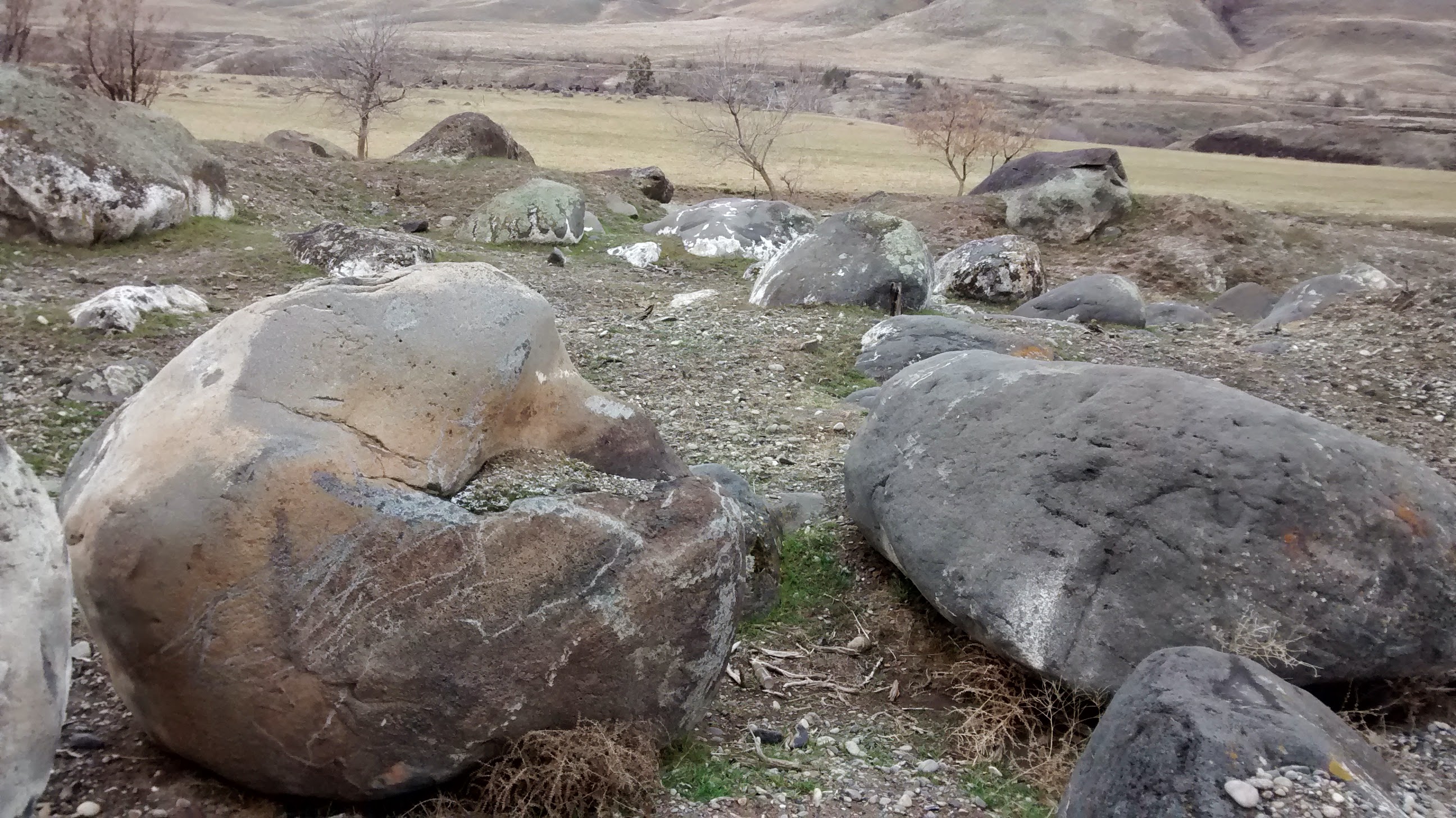
A few years ago, Larry and I drove through the Camas Prairie, a wilderness where there are lots more cattle and acreage than people.  It was a typical dusty dirt road in Idaho – of which there are many.  We drove for miles with only sagebrush, dirt and stones as our scenery.

Suddenly we came upon the prettiest little sunflowers lining that dry simple road.  I was shocked, wondering how there was enough moisture for them to grow in this parched, deserted country. 

As we continued to drive I got thinking about the culture we are now living in daily.  It’s a culture of outrage and harsh judgments, where everyone wants their opinion heard, leading to cancel culture, not unlike the stones and sagebrush.

If you don’t agree with me, I will cancel you as a person, I will cut you out of my life and count you as non-human with no value whatsoever.

Once we start thinking of people in this manner, we are simply throwing verbal rocks and dirt at each other.  It’s unpleasant, ugly, dangerous and divisive.  Whenever a person is labeled only as part of an ethnic people group, a religious ideology or a certain political leaning, we have certifiably canceled them as a human being. 

Every society creates dividing lines among people groups, categorizing them into hierarchies of importance according to the powers that be. We have all created caste systems in our own minds toward those we deem worthy or not worthy.

In his book, A Gentle Answer, Scott Sauls gives us a different way to live. He reminds us that Jesus loved us at our worst and if we are followers of Him, we are commanded to love others at their worst.  He says,

Jesus has been gentle toward us, so we have good reason to become gentle toward others, including those who treat us like enemies.  “You have heard that it was said, ‘You shall love your neighbor and hate your enemy.’  But I say to you, love your enemies and pray for those who persecute you, so that you may be sons of Your Father who is in heaven.” Matt. 5:43-45.  Because Jesus has covered all of our offenses, we can be among the least offensive and the least offended people in the world.  This is the way of the gentle answer.

Having a gentle answer has nothing to do with being weak.  Weakness is often shown in destruction and harm to other people’s bodies and physical property.  Weakness is shown by intimidating others, belittling those who disagree. Anyone can let anger overtake their emotions and act in violence, destroying with rage anything in their path.  It’s easy to criticize and tear down.

Speaking a gentle answer, especially toward those you disagree with, takes an incredible amount of restraint, a strength that requires the deepest and most courageous kind of faith.  A faith that ultimately believes in the justice of God, that He will work good out of evil – but in His time, not ours.

Seeing those delicate beautiful sunflowers among all the dry and brittle sage brush is a reminder of what kind words and a gentle answer look like in our culture of shouting judgments on others.  We have no power to change anyone’s opinion or ideology, especially not by belittling and mocking, but we can answer gently.

Lord, give us strength to give a gentle answer and become sunflowers in a desert wasteland of sagebrush and stones.

Ultra Marathon

Have you ever heard of the Ultra Marathon?  It’s a 544-mile race in Australia – typically 18 hours of running, 6 hours of sleeping  – on repeat for 7 days. Typically dominated by fit 20-somethings sponsored by Nike or Adidas, in 1983 a new competitor emerged.  Cliff Young, a 61-year-old in his Osh-Gosh overalls and rubber work boots with galoshes – in case it rained – showed up.

Cliff was a potato farmer with 2,000 head of sheep on the side.  He would run up and down the hills in his pasture for days and nights at a time, so he figured this race would just be a few more days beyond that. 

All the younger folks in the race blazed away from the finish line while Cliff started shuffling.  He was left in the dust as he shuffled along.  But at night when all the others were laying down to sleep for 6 hours, Cliff kept on shuffling,

All through the black nights, Cliff never stopped.  He had not heard about the conventional wisdom of running hard for 18 hours and sleeping 6.  The dark never slowed him down because he didn’t know he was supposed to stop, so he just kept on shuffling and gradually overcame the below 30 crowd in their $400 Nikes.

At the end of the race, Cliff Young came in first – a full 9 hours before the second-place runner crossed the finish line.  He was handed the prize, $10,000 but said he didn’t know there was a prize.  So as each runner after him crossed the line, he handed them some money because “they worked hard too.”  Cliff walked away with no money at all because he ran for the pure joy of running.

It’s less about speed and more about endurance. 

I wonder if we could live like Cliff Young Shuffled – and I don’t mean shuffling for 6 days without sleep.  But perhaps adapting some everyday shuffling, slow but steady – for the pure joy of it.

The same sure and steady rhythms, day in and day out – the making of the bed, followed by the opening of the Word, followed by the journaling of the heart, followed by the moving of the body – just this enduring shuffle of doing the next hard and holy small thing – will win everything in the end.                                                  Ann Voskamp

We can always rely on our Friend, the Holy Spirit, for the strength we need to keep on living through the light and the dark, through the gray days and the sunny – to persevere instead of giving up.

On my own, I would have given up years ago.  Life is hard and it’s not going to get any easier, but with promises of God,

I will never leave you or forsake you

Lo, I am with you always

I have loved you with an everlasting love

We need not ever give up.  If we have a pulse, we have a purpose.

It’s not our strength God’s looking for, but our weakness, as we surrender and trust Him to provide the strength for our struggles which will never end until we take our last breath.

Hold on, press on, surrender your will to His, and shuffle your race well so you will hear those precious words,

Well done, good and faithful servant

« Older posts

© 2026 Branches and Trees

Theme by Anders NorenUp ↑